The National Institute on Drug Abuse explains that no single factor predicts who will develop addiction. Genetic, environmental and developmental influences all contribute to risk. That broader picture leaves room for a reality families may find difficult to accept: care, opportunity and education matter, but they cannot make every individual immune. [2]
This is not a reason to dismiss prevention or to blame a parent for one accessible medication. It is a reason to replace certainty with attention. A person’s background can help explain their circumstances without becoming a verdict about what they should have been able to overcome alone.
What the Camera Cannot Tell Us
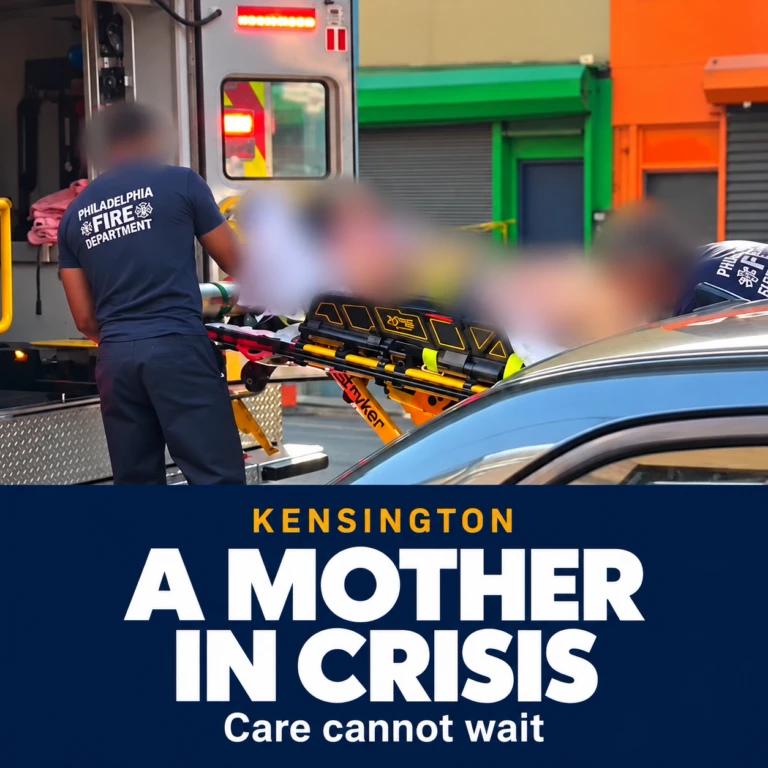
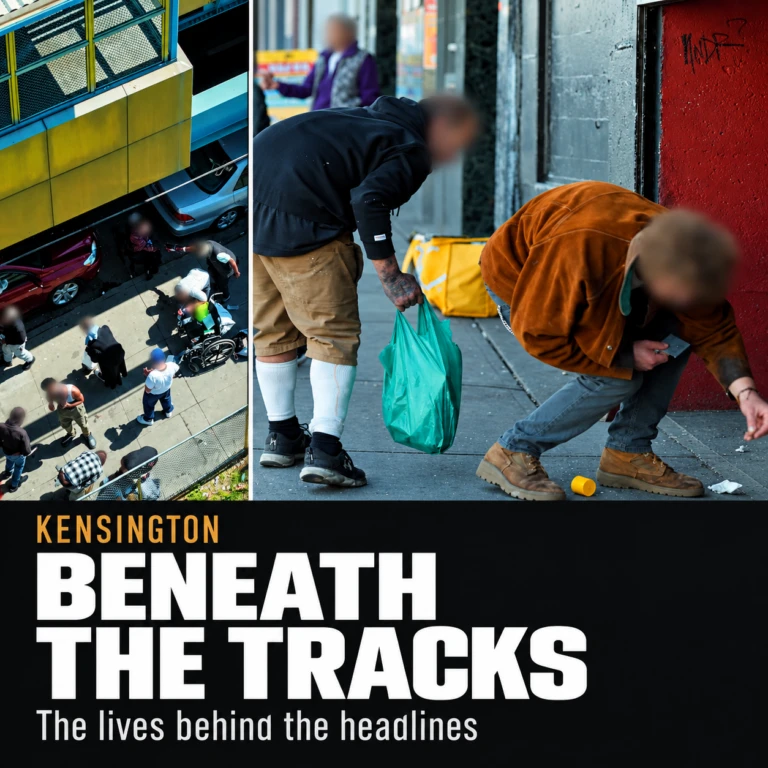
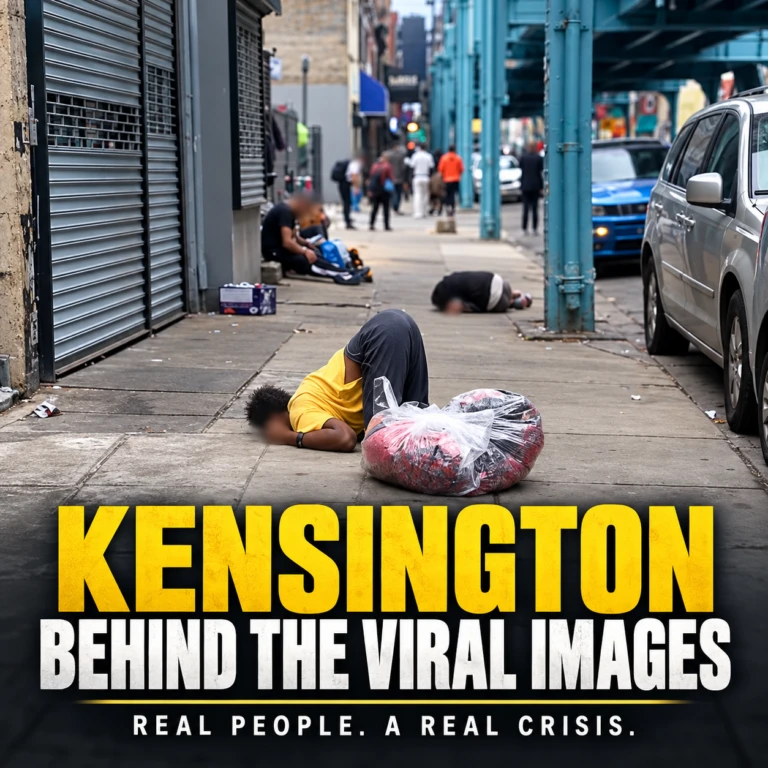
The Kensington footage makes a different kind of vulnerability visible. A walker stands near tents. A person sits against a wall. A passing camera records moments and moves on. It does not tell us their employment histories, family relationships, medical conditions or what support they have sought.

The same restraint belongs in a story about hidden addiction. Neither a business title nor a sidewalk scene measures a person’s worth. Treating one group as respectable and another as beyond help would reproduce the very mistake this comparison exposes: judging an entire life from the part that happens to be visible.
Make Room for Help Before a Collapse
NIDA describes substance use disorders as treatable conditions from which people can recover. A useful response begins with making room for an honest conversation and professional assessment. [3]
For readers, the challenge is to reconsider the evidence they rely on. Are we listening to what someone says about their use, or reassuring ourselves with their salary and schedule? Are we offering a route toward care, or waiting for a crisis that will finally make concern feel justified?
Todd’s present circumstances are not established by the material available here. His earlier account still leaves a question worth carrying beyond Kensington: how many people are being overlooked because their lives look organized? Share that question with compassion. Support credible recovery services. Make seeking help possible before the public image breaks.