Some encounters last only a few minutes, yet leave us thinking long after we walk away. Sometimes, the most unsettling part is not what we see, but the realization that someone may desperately need help while we struggle to understand how to reach them.
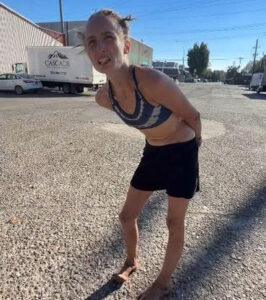
Along a quiet road near industrial buildings, a young woman appeared barefoot, looking unkempt and visibly distressed. She stood in the open, moving in ways that caught the attention of a man nearby. While others might have simply passed by, he decided to stop and see what was happening.
What followed was an unexpected encounter that raised more questions than answers.
The man tried to speak with her, hoping to understand her circumstances. Yet even simple questions seemed difficult to navigate. How do you help someone when you do not know their story, what they have experienced, or what kind of assistance they might need?
The young woman appeared to struggle with ordinary communication, leaving the man concerned about her well-being. However, appearances alone cannot explain what someone is experiencing. Her circumstances, health, and personal history remained unknown.
Rather than immediately drawing conclusions, the situation called for patience and compassion.
Behind the image of a barefoot woman standing beside a road could be a much larger story — one involving homelessness, isolation, personal hardship, or challenges that outsiders cannot easily recognize.
A person can be surrounded by buildings, traffic, and people going about their daily routines and still have no one to turn to.
The man seemed troubled by the possibility that she might not have a safe place to stay. Finding shelter, accessing appropriate healthcare, or connecting with social services could potentially make a difference. But recognizing that someone needs help is only the first step. Providing meaningful assistance can be far more complicated.
What did she need most at that moment? A safe place to rest? Medical attention? Support from a social worker? Or simply someone willing to listen without judging her?
There were no easy answers.
The encounter also highlights an uncomfortable reality: homelessness is not always just about lacking a roof overhead. For some people, it may involve social isolation, financial hardship, health challenges, or the absence of a reliable support network.
Still, it would be unfair to assume that we understand her situation simply by watching a short video.
How long had she been living this way? Did she have family members who knew where she was? Had anyone tried to help her before? And what would happen after the man eventually walked away?
These questions remained unanswered.
Perhaps the most heartbreaking aspect of the encounter was the uncertainty surrounding her future. The man could express concern, attempt to communicate, and consider possible ways to help, but he could not know everything about her life from a brief conversation.
Sometimes, a chance encounter is only the beginning of a much bigger story.
And the most important question is not simply what happened during that meeting, but what happened after the cameras stopped recording.
Continue to Part 2: When compassion meets reality — can one encounter make a difference in the life of someone who may need help?